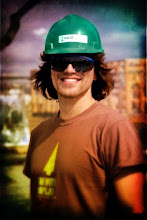
May 26th, 2010. I was on a plane headed for Kenya, with a lay-over in Switzerland. It has been exactly a year since I have left America. In honor of this one year anniversary, I would like to share some numbers and statistics of my experience so far. Here they are:
6 – The number of living chickens hanging upside down on bicycle handles (3 on each side), no doubt headed towards the market for selling.
7 – The record number of full grown people I have seen riding a motorcycle.
35 (2) – The record number of full grown people being carried by a 14-seater matatu (2 babies). The matatu broke down, and as we all got out of the vehicle (I was one of the 5 people standing on the outside door), I realized there were also 8 chickens inside.
Over a dozen – single exposed breasts I have seen from breast-feeding mothers.
6 – the total number of times I have swam in a year.
3 – the number of times I would sometimes swim in a single day.
47 – dead cockroaches I found in my room after two weeks absence.
Infinity – living cockroaches in and around my pit latrine.
60 – the most kilometers I have ever run in one week's time.
60 – the average kilometers I would swim each week for many consecutive weeks of my life.
3 – The number of items I can cross off my bucket list (1. swim in the indian ocean, 2. dream in another language, 3. be on both northern and southern hemispheres of the world at the same time)
1 – The number of strawberries I have eaten.
36 – letters and packages I have mailed, also the number of our starting group.
5 – The number of languages I am greeted in on a daily basis (Kiswahili, English, Taita, Duruma, Kamba)
1500 – liters of water I have used total in 10 months of being at my site. This doesn't include my water use when I travel to Nairobi or other cities, but it comes out to about 5.5 liters per day.
365 – The number of days I have been outside America.
426 – approximate number of days I have left until my service is through.
1 – times I have sincerely longed to be home.
0 – times I have regretted my decision to join the Peace Corps.
Thursday, May 26, 2011

Tuesday, May 17, 2011
Betty Crocker
Since I've lived in Kenya, I have only been cooking for myself. Nearly everything I cook is from my local open-air market with fresh fruits, vegetables, and legumes. Corn and wheat flour, spaghetti noodles, and other things I find in the larger supermarkets or small storefronts. I cook a small array of dishes, from spaghetti with home-made tomato sauce, tortillas with guacamole, coconut rice and beans, or the local dish of fried kale and “ugali.” I cannot say I am much of a cook though, since I prefer quantity over quality and healthy over delicious if I had to choose. Luckily I have access a variety of spices, so if I somehow go wrong in the cooking process, I douse my meal with my local favorites.
Cooking here is quite a process. It takes me nearly half an hour just cutting the onions, tomatoes, and other vegetables, or peeling carrots and potatoes with my knife. If I am pressed for time, I usually opt to cook the “ugali” and fried kale, because once the vegetables are cut it is just 15 minutes until the food is ready to eat.
This past Sunday for lunch I had run out fresh food to prepare myself, so I shuffled through my storage box for something to eat. With luck I found a packet of “Betty Crocker” instant mashed potatoes, and another packet of instant gravy. I flipped the packet and read the directions which instructed me to boil water and add the contents, then stir for one minute. The gravy sauce packet actually took less time than that. After 2 minutes had passed, I had a steaming, creaming plate of mashed potatoes and gravy.
I chuckled to myself at how quickly it all happened. Being used to at least a half-hour's preparation before any meal, I felt like I somehow cheated. I even looked around my empty room, as if searching for confirmation that the food was ready. I decided I should share some with my neighbors as a cultural experience, showing them the empty packets and telling them that this is how American food is.
I was astounded at the taste. Despite the assurance from Betty Crocker herself that the mashed potatoes were “REAL” as written on the package, the taste was so foreign to me still. Just as one can taste the difference in aspartame or some other synthesized, non-calorie sweetener compared to the real granules of sugar, the packaged food instantly betrayed itself to my senses. I had become so used to real unadulterated foods, I found myself loath to finishing the instant potatoes and gravy. But I did finish them; there are starving children in Africa.
What I realized out of this was not the taste of Betty Crocker's mashed potatoes, but the lifestyle Americans lead that should require instant packaged foods, microwaves, and infomercials that can sell you a “Slap-chop.” Everything Americans do has to be expedited if possible, so that we can do more activities and be more productive throughout our day. Yet here in Kenya, I find myself living completely perpendicular to the fast-paced American life, and I am often frustrated at how I wait long hours for transportation, or how cooking takes a huge chunk of my evening. But the reminder of my American lifestyle made me a little bit sick inside. It seems we want so much out of every minute of our day that we miss many of the subtle flavors in life. We want our crops to grow bigger and tastier, our lines at the grocery store to be shorter, and our fast-food to be faster. I am beginning to think that maybe it's okay to live a little bit slower. Maybe it is okay to take the time to metaphorically cut your vegetables and prepare your food in such a way to make Betty Crocker turn her nose up: both in defiance of your boycott on her instant-mashed potatoes and at the enchanting aroma of your original, heavily spiced creations.
Cooking here is quite a process. It takes me nearly half an hour just cutting the onions, tomatoes, and other vegetables, or peeling carrots and potatoes with my knife. If I am pressed for time, I usually opt to cook the “ugali” and fried kale, because once the vegetables are cut it is just 15 minutes until the food is ready to eat.
This past Sunday for lunch I had run out fresh food to prepare myself, so I shuffled through my storage box for something to eat. With luck I found a packet of “Betty Crocker” instant mashed potatoes, and another packet of instant gravy. I flipped the packet and read the directions which instructed me to boil water and add the contents, then stir for one minute. The gravy sauce packet actually took less time than that. After 2 minutes had passed, I had a steaming, creaming plate of mashed potatoes and gravy.
I chuckled to myself at how quickly it all happened. Being used to at least a half-hour's preparation before any meal, I felt like I somehow cheated. I even looked around my empty room, as if searching for confirmation that the food was ready. I decided I should share some with my neighbors as a cultural experience, showing them the empty packets and telling them that this is how American food is.
I was astounded at the taste. Despite the assurance from Betty Crocker herself that the mashed potatoes were “REAL” as written on the package, the taste was so foreign to me still. Just as one can taste the difference in aspartame or some other synthesized, non-calorie sweetener compared to the real granules of sugar, the packaged food instantly betrayed itself to my senses. I had become so used to real unadulterated foods, I found myself loath to finishing the instant potatoes and gravy. But I did finish them; there are starving children in Africa.
What I realized out of this was not the taste of Betty Crocker's mashed potatoes, but the lifestyle Americans lead that should require instant packaged foods, microwaves, and infomercials that can sell you a “Slap-chop.” Everything Americans do has to be expedited if possible, so that we can do more activities and be more productive throughout our day. Yet here in Kenya, I find myself living completely perpendicular to the fast-paced American life, and I am often frustrated at how I wait long hours for transportation, or how cooking takes a huge chunk of my evening. But the reminder of my American lifestyle made me a little bit sick inside. It seems we want so much out of every minute of our day that we miss many of the subtle flavors in life. We want our crops to grow bigger and tastier, our lines at the grocery store to be shorter, and our fast-food to be faster. I am beginning to think that maybe it's okay to live a little bit slower. Maybe it is okay to take the time to metaphorically cut your vegetables and prepare your food in such a way to make Betty Crocker turn her nose up: both in defiance of your boycott on her instant-mashed potatoes and at the enchanting aroma of your original, heavily spiced creations.
Wednesday, May 11, 2011
Environmentally Friendly
People are bad for the environment. Centuries of economic development have pioneered the raping of the Earth's natural resources, from clearing away dense forest for agriculture and infrastructure to digging in every place imaginable for oil and combustible fuels. But these days, environmental protection has been a popular discussion topic. Words like “Ecological Footprint”, “Climate Change”, and “Greenhouse Gases” have infiltrated our vocabulary like Chinese-made goods and services. Nowadays both individuals and corporations alike are urged to reduce their negative impact on the environment by “going green” and negating their carbon footprint upon the world. Websites offer carbon-footprint calculations, which estimates the level of “tonnage of carbon dioxide” you emit per year.
I am quite aware that developed nations pollute a great deal more than developing ones, and so I decided to compare my lifestyle from America to how I live now by using one of these online carbon footprint tests. It asked questions concerning the car I drive, the flights I've taken, my household electricity & gas usage, my culinary habits, my purchasing & recycling habits, and a list of other miscellaneous subjects. Here's how it turns out:
Car
In the year before I came to Kenya, I would drive 60 to 80 miles a day going to and from work, running various errands, or visiting certain people, and I would often make those trips all alone. Now I walk and bike everywhere, or take public transportation if the place is too far. Even public transportation vehicles are packed to the maximum carrying capacity. In Southern California, you qualify for the “carpool lane” by having just 2 or more people in the car. Kenya redefines “carpooling” by carrying 30 passengers (and often chickens and goats) in a 14-seat van.
Water
I remember back in college our swim team would have 20 showers running full blast for a good 15 to 20 minutes as we relaxed under the massaging pressure of the hot water. And this would happen twice or even three times per day because of multiple swim practices. Gallons and gallons of water were used from our swim team alone. Now I use 1.5 liters of water to bathe. Perhaps I shouldn't admit to this so openly, but often I will bathe every other day. On a given day, I can use a total of 6 to 10 liters of water for cooking, cleaning, bathing and drinking. That is about 2 flushes of a toilet.
Food
In America, I would eat meat for at least two meals a day. Processed foods, candies, and anything that traveled for 100 miles or further to my supermarket, I was very likely to purchase. But in Kenya, I have given vegetarianism a try (it is really hard to preserve meats and cheeses with ridiculous-hot temperatures and no refrigeration) and all my food comes less than 10 kilometers away.
Recycling
I've always hated plastic bottles and things, and believed firmly in recycling back in the States, but here in Kenya, I take recycling to a whole new level. I reuse everything until it disintegrates here. If I buy a loaf of bread, I reuse the flimsy plastic bag it comes in when I go to the market so the mamas do not have to use one of their own bags for the vegetables I purchase (not only do these mamas save a quarter of a shilling, it gets me talking with them about how plastic materials are bad for the environment). Hefty grocery bags from the bigger supermarkets are like valued gems to me, and they get well used before they are discarded (burned).
Energy
I have two lights in my home. Both have energy-saving light-bulbs in them, and I use one for maybe 3 hours every night. I do have a socket for powering/charging things, and I usually use my computer for a couple hours daily. I have a reading light that is charged with a solar cell. My current net energy use is marginal at most, and it's actually not too different from how I lived back in the states.
Travel
The trip to and from Kenya from Los Angeles was an ecological killer. Just in a round trip ticket I accounted for more than half of my total emissions for two years (2.66 tons of carbon dioxide).
Over its lifetime an average tree can sequester or absorb about 1 ton of carbon dioxide. Americans emit an average of 20 tons of carbon dioxide per year. Because trees don't begin to be much use in negating carbon dioxide until they reach adolescence, 6 trees need to be planted for every ton of carbon dioxide emitted (and each tree must survive for its lifespan). Therefore, Americans should plant 120 trees per year on average to wipe their carbon footprint clean.
The going rate of a ton of carbon on the open market is about $5.50. Instead of emitting the 40 tons of carbon dioxide I should have by living in the states, I am at a grand total of 5.7 for the two years I'll be living here. It doesn't sound like all that much, but the U.S. Government gets an average environmentally-based financial benefit of $188.65 for just me, and I can imagine similar figures for every other Peace Corps volunteer.
But the average Kenyan has a footprint of 0.31 tons per year. Even excluding my flight here and back, I emit three times more than the average for this country.
When I lived in America, there is such a disconnect between being responsible with the use of resources and the effect it has on others. But here I see a little bit more clearly how I am impacting the lives of others. As an example, water is a major problem where I live. The roads are constantly filled with people carrying their water for long distances. Groups of mamas walk together with their 20 liter jerry can on their head, talking to each other to keep them cheerful. Grimacing young boys wheel bicycles with 60 liters strapped to the back (20 gallons) uphill through sandy patches of road. In light of this, I find it difficult to waste even a drop of water. If the rains come, it is all hands on deck for me, as I put out every basin and pot that I own to catch the drops of rain from my corrugated iron roof. Though I am able to get water at the nearby school, I conserve as much as possible because I know that the more I draw water from the school, the less others will have. And generally speaking, the more resources I use, the more of a strain I place on resources as a whole. The longer I live here, the more convicted I feel of the decadence I used to live. It makes me reevaluate how I want to continue living should I get back to the states.
I am quite aware that developed nations pollute a great deal more than developing ones, and so I decided to compare my lifestyle from America to how I live now by using one of these online carbon footprint tests. It asked questions concerning the car I drive, the flights I've taken, my household electricity & gas usage, my culinary habits, my purchasing & recycling habits, and a list of other miscellaneous subjects. Here's how it turns out:
Car
In the year before I came to Kenya, I would drive 60 to 80 miles a day going to and from work, running various errands, or visiting certain people, and I would often make those trips all alone. Now I walk and bike everywhere, or take public transportation if the place is too far. Even public transportation vehicles are packed to the maximum carrying capacity. In Southern California, you qualify for the “carpool lane” by having just 2 or more people in the car. Kenya redefines “carpooling” by carrying 30 passengers (and often chickens and goats) in a 14-seat van.
Water
I remember back in college our swim team would have 20 showers running full blast for a good 15 to 20 minutes as we relaxed under the massaging pressure of the hot water. And this would happen twice or even three times per day because of multiple swim practices. Gallons and gallons of water were used from our swim team alone. Now I use 1.5 liters of water to bathe. Perhaps I shouldn't admit to this so openly, but often I will bathe every other day. On a given day, I can use a total of 6 to 10 liters of water for cooking, cleaning, bathing and drinking. That is about 2 flushes of a toilet.
Food
In America, I would eat meat for at least two meals a day. Processed foods, candies, and anything that traveled for 100 miles or further to my supermarket, I was very likely to purchase. But in Kenya, I have given vegetarianism a try (it is really hard to preserve meats and cheeses with ridiculous-hot temperatures and no refrigeration) and all my food comes less than 10 kilometers away.
Recycling
I've always hated plastic bottles and things, and believed firmly in recycling back in the States, but here in Kenya, I take recycling to a whole new level. I reuse everything until it disintegrates here. If I buy a loaf of bread, I reuse the flimsy plastic bag it comes in when I go to the market so the mamas do not have to use one of their own bags for the vegetables I purchase (not only do these mamas save a quarter of a shilling, it gets me talking with them about how plastic materials are bad for the environment). Hefty grocery bags from the bigger supermarkets are like valued gems to me, and they get well used before they are discarded (burned).
Energy
I have two lights in my home. Both have energy-saving light-bulbs in them, and I use one for maybe 3 hours every night. I do have a socket for powering/charging things, and I usually use my computer for a couple hours daily. I have a reading light that is charged with a solar cell. My current net energy use is marginal at most, and it's actually not too different from how I lived back in the states.
Travel
The trip to and from Kenya from Los Angeles was an ecological killer. Just in a round trip ticket I accounted for more than half of my total emissions for two years (2.66 tons of carbon dioxide).
Over its lifetime an average tree can sequester or absorb about 1 ton of carbon dioxide. Americans emit an average of 20 tons of carbon dioxide per year. Because trees don't begin to be much use in negating carbon dioxide until they reach adolescence, 6 trees need to be planted for every ton of carbon dioxide emitted (and each tree must survive for its lifespan). Therefore, Americans should plant 120 trees per year on average to wipe their carbon footprint clean.
The going rate of a ton of carbon on the open market is about $5.50. Instead of emitting the 40 tons of carbon dioxide I should have by living in the states, I am at a grand total of 5.7 for the two years I'll be living here. It doesn't sound like all that much, but the U.S. Government gets an average environmentally-based financial benefit of $188.65 for just me, and I can imagine similar figures for every other Peace Corps volunteer.
But the average Kenyan has a footprint of 0.31 tons per year. Even excluding my flight here and back, I emit three times more than the average for this country.
When I lived in America, there is such a disconnect between being responsible with the use of resources and the effect it has on others. But here I see a little bit more clearly how I am impacting the lives of others. As an example, water is a major problem where I live. The roads are constantly filled with people carrying their water for long distances. Groups of mamas walk together with their 20 liter jerry can on their head, talking to each other to keep them cheerful. Grimacing young boys wheel bicycles with 60 liters strapped to the back (20 gallons) uphill through sandy patches of road. In light of this, I find it difficult to waste even a drop of water. If the rains come, it is all hands on deck for me, as I put out every basin and pot that I own to catch the drops of rain from my corrugated iron roof. Though I am able to get water at the nearby school, I conserve as much as possible because I know that the more I draw water from the school, the less others will have. And generally speaking, the more resources I use, the more of a strain I place on resources as a whole. The longer I live here, the more convicted I feel of the decadence I used to live. It makes me reevaluate how I want to continue living should I get back to the states.
Thursday, April 28, 2011
Mombasa
Mombasa. East Africa's biggest port bustles with life. Shirtless young men pull heavy carts of fruit down the streets, while others are spotted resting on a pile of dirt they recently shoveled in the midday sun. Small 3-wheeled taxis zip in and out of stalled traffic and abruptly stop in front of any person standing idly by the road, hoping for a customer. The wide sidewalks are lined with mamas sitting on the floor selling coconuts, mangoes, or papaya, as well as street cooks who turn your head at the sweet smell of their freshly cooked food. Whole fish, seemingly still quivering in remembrance of a recent swim, are sold fresh near the water. The vast Indian Ocean shimmers translucent green until the limits of the horizon. This city is enchanted.
Mombasa is home to Kenya's Swahili tribe (actually from the Arabic word sawahil, which means “people of the coast”), yet among them live large cohorts of Middle Easterners and Indians. Muslim women walk around like shadows in their full black buibui. Swahili women wear fashionable “lassos” with colored patterns and a “Kiswahili Saying” written upon them, and Indian girls blithely stroll together along the streets, each dressed in a different, brightly colored sari. Although I love the people in my community, I welcome the cultural diversity Mombasa has to offer like a breath of fresh air.
The humidity attaches itself to my body like another layer of sweat. As I roam the streets I search for the shaded sidewalks so that I may hide from the sun. The chilled avocado juice sold at the corner of the street looks like a tempting option, no doubt a cup of instant diarrhea for tourists unaccustomed to the germs of Africa. As for me, I quickly down a glass without worry. The seducing aroma of roasted meat wafts from the racks of outdoor cooks, so tempting it can make even a devote vegetarian commit heresy. I have yet to try it.
Tourists who spend a day or two in Mombasa usually opt for walking tours to Fort Jesus and trips to the beach. Tourists may just see a glimpse of Mombasa town before they leave, and they will remember large buildings, nice restaurants, and wide roads. But with just a little bit of adventuring down back alleys, I discover an entirely new picture of Mombasa. Despite the touristy 3 to 8 dollar restaurants, I find the local restaurants with the traditional Kenyan food for just under 50 cents. As I continue down these alleys I see mamas hanging their laundry on lines that cut across the walkways. I greet them as I duck under their dripping clothes, and they return a friendly smile and continue with their chores. A few blocks down I come across a few teenagers playing checkers. After a few words, I find myself playing the next game with a small crowd of youth watching. I won the first game and my opponent won the next two.
When I have spare time in Mombasa, I often find myself in a towering 7-story shopping center—but on the 3rd floor in the fabric section. I much enjoy looking at all the different, beautiful fabrics this store has to offer without the constant heckling the street peddlers give me. As I move through the different isles, I conspicuously reach out and feel the texture of the different materials. All the employees know me now. We often have casual conversations in Swahili, and one of them always tells me that I look exactly like the Arsenal football player Tomas Rosicky, and he writes his name on a small piece of paper along with “Jazz 7” meaning “jersey 7” so I can look him up on the internet. Sadly each time I return home, I forget to complete my end of the deal.
I stroll through the open-air markets filled with spices and produce, and often when sellers yell for my attention with, “How are you? Welcome!” I often return a puzzled look at them and pretend I don't speak English. In Swahili I tell them I am from Spain, and I ask them if they know Spanish. Nobody ever knows Spanish, so this gamble always works to my favor. And my Swahili is good enough now that I can complete transactions and have conversations with people, so I take the opportunities in the market to practice speaking and listening.
Mombasa. After I finish my errands I board a matatu to take me back to my village. As we cross the bridge leading away from town I see sailboats making their way out into the open sea, and palm trees along the shores swaying in the breeze, as if waving me goodbye. The emerald ocean twinkles through the dirty windows of the matatu, beckoning me to come back again. This city is enchanted.
Mombasa is home to Kenya's Swahili tribe (actually from the Arabic word sawahil, which means “people of the coast”), yet among them live large cohorts of Middle Easterners and Indians. Muslim women walk around like shadows in their full black buibui. Swahili women wear fashionable “lassos” with colored patterns and a “Kiswahili Saying” written upon them, and Indian girls blithely stroll together along the streets, each dressed in a different, brightly colored sari. Although I love the people in my community, I welcome the cultural diversity Mombasa has to offer like a breath of fresh air.
The humidity attaches itself to my body like another layer of sweat. As I roam the streets I search for the shaded sidewalks so that I may hide from the sun. The chilled avocado juice sold at the corner of the street looks like a tempting option, no doubt a cup of instant diarrhea for tourists unaccustomed to the germs of Africa. As for me, I quickly down a glass without worry. The seducing aroma of roasted meat wafts from the racks of outdoor cooks, so tempting it can make even a devote vegetarian commit heresy. I have yet to try it.
Tourists who spend a day or two in Mombasa usually opt for walking tours to Fort Jesus and trips to the beach. Tourists may just see a glimpse of Mombasa town before they leave, and they will remember large buildings, nice restaurants, and wide roads. But with just a little bit of adventuring down back alleys, I discover an entirely new picture of Mombasa. Despite the touristy 3 to 8 dollar restaurants, I find the local restaurants with the traditional Kenyan food for just under 50 cents. As I continue down these alleys I see mamas hanging their laundry on lines that cut across the walkways. I greet them as I duck under their dripping clothes, and they return a friendly smile and continue with their chores. A few blocks down I come across a few teenagers playing checkers. After a few words, I find myself playing the next game with a small crowd of youth watching. I won the first game and my opponent won the next two.
When I have spare time in Mombasa, I often find myself in a towering 7-story shopping center—but on the 3rd floor in the fabric section. I much enjoy looking at all the different, beautiful fabrics this store has to offer without the constant heckling the street peddlers give me. As I move through the different isles, I conspicuously reach out and feel the texture of the different materials. All the employees know me now. We often have casual conversations in Swahili, and one of them always tells me that I look exactly like the Arsenal football player Tomas Rosicky, and he writes his name on a small piece of paper along with “Jazz 7” meaning “jersey 7” so I can look him up on the internet. Sadly each time I return home, I forget to complete my end of the deal.
I stroll through the open-air markets filled with spices and produce, and often when sellers yell for my attention with, “How are you? Welcome!” I often return a puzzled look at them and pretend I don't speak English. In Swahili I tell them I am from Spain, and I ask them if they know Spanish. Nobody ever knows Spanish, so this gamble always works to my favor. And my Swahili is good enough now that I can complete transactions and have conversations with people, so I take the opportunities in the market to practice speaking and listening.
Mombasa. After I finish my errands I board a matatu to take me back to my village. As we cross the bridge leading away from town I see sailboats making their way out into the open sea, and palm trees along the shores swaying in the breeze, as if waving me goodbye. The emerald ocean twinkles through the dirty windows of the matatu, beckoning me to come back again. This city is enchanted.
Thursday, April 7, 2011
The Price of Virginity
In 2009, a 22-year old American girl named Natalie Dylan put her virginity up for auction online. Her top bid came from a 39-year old Australian at the price of $3.8 million.
$3.8 million.
I couldn't believe that price when I first read it. The article came with a picture, and sure, she was an attractive girl. But $3.8 million? In a single transaction, Natalie undoubtedly became one of the highest paid prostitutes of all time.
I began researching the idea of virginity's monetary value after a recent interview I had with a former prostitute near my town. Her story goes like this:
Her parents died when she was very young, so her aunt and uncle were her caretakers. For reasons unknown to this young girl, her guardians began mistreating her at a young age. Often, she would be beaten by her male cousins without consequence, and she would even go days without being given food to eat. When she would find work washing clothes or carrying water, her aunt would take what little money she earned and say it was payment for all they were providing for her. It came to a point where her aunt stole all her clothing, so she had nothing but the clothes on her back to wear.
The nearby town to where this girl lived is wrought with drugs and prostitution. The town sits on the roadside to and from Nairobi, and many truckers stop for the night to rest from their long day's journey. The daytime bustles with commotion, and the nights with licentious behavior. This young girl sought refuge from her caretakers in this town.
Though she searched desperately for work, there was none to be found for a young, desperate girl. With no money, no food, and with just the clothes on her back, she was running out of time. In her desperate search for work, she came across a woman who told her that if a man wanted to have sex with her, she should charge him 150 ksh, or $1.80. And it was not long before she had an offer.
Soon after she became engulfed in the prostitution business. The quick money and high demand were reason enough to continue with her work, and money provided for the basic needs she so sorely needed. In my discussion with her, she disclosed the whole gamut of the dirty business. Thirty minutes of service would cost $1.80, and for double that time it would be around $4.00. A whole night would cost $15. On a usual night, she would go with 7 to 10 men, and she would still charge full price for the men who didn't come after their allotted time. She was especially afraid of those who wanted the whole night, because then they could do “whatever they want” with the girls. That's why the price is so “high”.
During the interview, the girl cradled her 2-month old baby in her arms. The baby was conceived by a boyfriend who left her. She said that her boyfriend was the only one she had ever slept with without a condom. Still, when she spoke of him, her voice livened and hints of a smile showed upon her face. She partitioned herself emotionally, separating her “work” from her emotional attachment with her boyfriend. The girl was desperate for love and protection, and she gave herself to her boyfriend both physically and emotionally to seek a filler for the thing she had been missing her entire life.
Just love. She was too young to remember the sweet embrace of her parents before they passed away. Never in her life did she have a place to go where she could find people who truly loved her and cared for her. Never had she felt the comforting presence of someone who would sacrifice their life for her. She clung tightly to the fantasy that the boy who got her pregnant would fill that void. The baby she held in her arms was a representation of the trust and openness she extended to only her boyfriend. By having unprotected sex with him, she gave him all of her “virginity,” and with it, all of her trust and love. She just expected the same in return.
In my mind, there is a fine line between love and prostitution. Boyfriends may take their girlfriends out for a fancy dinner and movie, but with sexual expectations in return. Even wives have been known to refuse sex to their husbands if their husbands wont comply to their certain demands. This is prostitution. Prostitution is the bastardization of giving. It turns the selfless, beautiful act of giving into a tool used for manipulation. Even this young girl's aunt and uncle expected payment in return for raising her. It's no wonder she was inclined to this lifestyle.
It broke my heart to hear this girl's story, and I so much wanted to hold her and tell her how much she was still worth.
When my counterpart asked her how she felt during her first time she went with a man, she turned her head down and uttered the word, “bitter.” She was 15 years old. Her virginity was worth $1.80.
$3.8 million.
I couldn't believe that price when I first read it. The article came with a picture, and sure, she was an attractive girl. But $3.8 million? In a single transaction, Natalie undoubtedly became one of the highest paid prostitutes of all time.
I began researching the idea of virginity's monetary value after a recent interview I had with a former prostitute near my town. Her story goes like this:
Her parents died when she was very young, so her aunt and uncle were her caretakers. For reasons unknown to this young girl, her guardians began mistreating her at a young age. Often, she would be beaten by her male cousins without consequence, and she would even go days without being given food to eat. When she would find work washing clothes or carrying water, her aunt would take what little money she earned and say it was payment for all they were providing for her. It came to a point where her aunt stole all her clothing, so she had nothing but the clothes on her back to wear.
The nearby town to where this girl lived is wrought with drugs and prostitution. The town sits on the roadside to and from Nairobi, and many truckers stop for the night to rest from their long day's journey. The daytime bustles with commotion, and the nights with licentious behavior. This young girl sought refuge from her caretakers in this town.
Though she searched desperately for work, there was none to be found for a young, desperate girl. With no money, no food, and with just the clothes on her back, she was running out of time. In her desperate search for work, she came across a woman who told her that if a man wanted to have sex with her, she should charge him 150 ksh, or $1.80. And it was not long before she had an offer.
Soon after she became engulfed in the prostitution business. The quick money and high demand were reason enough to continue with her work, and money provided for the basic needs she so sorely needed. In my discussion with her, she disclosed the whole gamut of the dirty business. Thirty minutes of service would cost $1.80, and for double that time it would be around $4.00. A whole night would cost $15. On a usual night, she would go with 7 to 10 men, and she would still charge full price for the men who didn't come after their allotted time. She was especially afraid of those who wanted the whole night, because then they could do “whatever they want” with the girls. That's why the price is so “high”.
During the interview, the girl cradled her 2-month old baby in her arms. The baby was conceived by a boyfriend who left her. She said that her boyfriend was the only one she had ever slept with without a condom. Still, when she spoke of him, her voice livened and hints of a smile showed upon her face. She partitioned herself emotionally, separating her “work” from her emotional attachment with her boyfriend. The girl was desperate for love and protection, and she gave herself to her boyfriend both physically and emotionally to seek a filler for the thing she had been missing her entire life.
Just love. She was too young to remember the sweet embrace of her parents before they passed away. Never in her life did she have a place to go where she could find people who truly loved her and cared for her. Never had she felt the comforting presence of someone who would sacrifice their life for her. She clung tightly to the fantasy that the boy who got her pregnant would fill that void. The baby she held in her arms was a representation of the trust and openness she extended to only her boyfriend. By having unprotected sex with him, she gave him all of her “virginity,” and with it, all of her trust and love. She just expected the same in return.
In my mind, there is a fine line between love and prostitution. Boyfriends may take their girlfriends out for a fancy dinner and movie, but with sexual expectations in return. Even wives have been known to refuse sex to their husbands if their husbands wont comply to their certain demands. This is prostitution. Prostitution is the bastardization of giving. It turns the selfless, beautiful act of giving into a tool used for manipulation. Even this young girl's aunt and uncle expected payment in return for raising her. It's no wonder she was inclined to this lifestyle.
It broke my heart to hear this girl's story, and I so much wanted to hold her and tell her how much she was still worth.
When my counterpart asked her how she felt during her first time she went with a man, she turned her head down and uttered the word, “bitter.” She was 15 years old. Her virginity was worth $1.80.
Friday, April 1, 2011
Wood U. Rathr
April 1st. My favorite holiday. A day for crafty lies and premeditated deceit, with each prank cordially intended for those you love and think about. In my mind, it is like Valentines Day, except not teeming with cliché. Sadly for me, this holiday is not widely celebrated in Kenya. Should I even dare to put cooked rice at the bottom of all my neighbor's shoes, or walk into my office with an eye-patch, it would compromise my community integration and my general camaraderie with the people here. So instead, I have decided to let my alter ego, “Mr. Rathr” infiltrate my blog-space. Enjoy!
Wood U. Rathr be the fastest onion chopper in the world OR an above-average ventriloquist?
Wood U. Rathr never have a flat tire in anything you drive OR have 16 more minutes per day than everyone else (note: everyone is frozen in time).
Wood U. Rathr have to change your name to “Fanny Mcgee” and always wear a large name-tag OR name (or rename) both your first and last born “Thing One” and “Thing Two”?
Wood U. Rathr have to drink two red-bulls before you sleep Sunday night and take a double dose of melatonin when you wake Monday morning OR involuntarily recite the entirety of Hamlet's famous “to be our not to be” any time anyone says “shake” or “spear”?
Wood U. Rathr wrap your feet in duct tape every Wednesday and go without shoes OR have an irrational reaction to stapled paper if the staple is not perfectly horizontal?
Wood U. Rathr laugh differently every time OR sometimes wake up with Jack Nicholson's voice (and spend the day with it)?
Wood U. Rathr never know the date OR instantly forget what you just ate?
Wood U. Rathr see the world literally black and white OR morally black and white?
Wood U. Rathr be considered one of the greatest Haiku writers of all time OR be an extra of your choice in 4 Johnny Depp movies?
Wood U. Rathr have the hand strength to juice a carrot with slight effort OR own a respectably sized avocado grove in San Diego, California?
Wood U. Rathr be given the market price, in cash, of a bar of gold bouillon but have to carry an actual bar of gold always OR drink only a luke-warm, vitamin fortified tofu broth every March, April, and May, but get free restaurant meals every other month?
Wood U. Rathr have an obnoxiously large signature OR be unable to text or dial cell phones with your thumbs?
Wood U. Rathr have the power to taste a restaurant item just by running your finger over the words on the menu OR have the ability to just once see your future if you had chosen to marry a certain person?
Happy April Fools!
Wood U. Rathr be the fastest onion chopper in the world OR an above-average ventriloquist?
Wood U. Rathr never have a flat tire in anything you drive OR have 16 more minutes per day than everyone else (note: everyone is frozen in time).
Wood U. Rathr have to change your name to “Fanny Mcgee” and always wear a large name-tag OR name (or rename) both your first and last born “Thing One” and “Thing Two”?
Wood U. Rathr have to drink two red-bulls before you sleep Sunday night and take a double dose of melatonin when you wake Monday morning OR involuntarily recite the entirety of Hamlet's famous “to be our not to be” any time anyone says “shake” or “spear”?
Wood U. Rathr wrap your feet in duct tape every Wednesday and go without shoes OR have an irrational reaction to stapled paper if the staple is not perfectly horizontal?
Wood U. Rathr laugh differently every time OR sometimes wake up with Jack Nicholson's voice (and spend the day with it)?
Wood U. Rathr never know the date OR instantly forget what you just ate?
Wood U. Rathr see the world literally black and white OR morally black and white?
Wood U. Rathr be considered one of the greatest Haiku writers of all time OR be an extra of your choice in 4 Johnny Depp movies?
Wood U. Rathr have the hand strength to juice a carrot with slight effort OR own a respectably sized avocado grove in San Diego, California?
Wood U. Rathr be given the market price, in cash, of a bar of gold bouillon but have to carry an actual bar of gold always OR drink only a luke-warm, vitamin fortified tofu broth every March, April, and May, but get free restaurant meals every other month?
Wood U. Rathr have an obnoxiously large signature OR be unable to text or dial cell phones with your thumbs?
Wood U. Rathr have the power to taste a restaurant item just by running your finger over the words on the menu OR have the ability to just once see your future if you had chosen to marry a certain person?
Happy April Fools!
Friday, March 25, 2011
The Lesser Sex
The office was quiet save for the clicking of fingers upon a keyboard. The secretary was busy at work, transposing minutes from a recent meeting onto the computer. Just days before, the secretary discovered that her husband was cheating on her, so the busy work she had in front of her was a welcomed relief from her thoughts. I was in her company, and I sat quietly studying my Swahili book. Our chairman was seated in his usual chair in the next room, shuffling through files or reading the daily paper. Things proceeded peacefully along.
Suddenly the manager storms in, breaking the office's peace like a rock thrown into a still pond. He comes in with the usual smile and first greets me, asking how the morning was and discussing his concern for the late rains. When finishing with me, he briefly greets the secretary, and then moves into the next room where he showers the chairman with the whole arsenal of salutations, as if they had not seen each other for months. After the long greeting session, the manager returns to the office with a small stack of papers and he tosses them over the secretary's busy fingers. “Type this,” He commanded flatly. The secretary returned his gesture with a deep glower, obviously bothered by the lack of respect in his demeanor. She quietly removed her new stack of work from the keyboard where they blocked her from continuing her current assignment, and as she set it aside her computer, the manager turned to her and said, “And have it done by today.”
Enough. I felt her anger swell, involuntarily moving her to speak. She began like this, “Why do you treat me like this? What have I done to you?” Her voice rose with emotion as she continued, switching languages to her more comfortable Swahili. She stormed into the chairman's office, her recent workload gripped firmly in her hands, and she began to plead her case in front of him. The manager joined them in the next room, and a full argument erupted.
I saw it coming. Tensions had been high for over four months between the two members of this organization, and it was only a matter of time before this verbal confrontation. It started when the manager made sexual advances upon the secretary, but was refused outright. In turn, a passive-aggressive battle to exert his dominance over her ensued.
I could not understand the conversation in the least. As the voices rose in volume, they increased in tempo, spewing long chains of Swahili sentences even a trained ear could have difficulty with. Then, from nowhere I heard the manager break into English, stating, “But chairman, She's a woman. She's a lesser sex. I cannot take her seriously.”
Wow. Up to this time I had never heard a single racist, tribalist, or sexist comment from the manager. I always saw him with an amicable smile and a willingness to please. It was shocking to hear those words spoken from his lips, and the words reverberated in my head.
To say such a thing in a workplace in America is an instant firing, and perhaps a lawsuit.
The reaction from the chairman was almost condoning. It was as if “She's a lesser sex” is a perfectly valid reason to treat someone the way he did. The secretary's frustration manifested into tears, and she stormed out of the office despite the chairman's attempts to console her. The manager emerged from the chairman's office with a grin and an air of victory about him. The muscles in my arms tightened and my fists clenched tight, aching to release themselves upon the manager's contrived smile.
I'm sure if the secretary had one wish, it would be to have her husband stop cheating on her, or at least to not have caught her husband cheating on her. The burden of her personal life was made known only to me and her select friends, none of whom work in the office. And knowing her entire story, I empathized deeply.
For the first time, I felt the tragedy of being a woman in this society. In the secretary's tears I felt a small piece of the heavy weight of subjugation a working woman has to bear in the presence of men; men who were raised with a sense of entitlement over their female counterparts. To be shattered emotionally, to be oppressed openly, and to be culturally obligated to endure, this secretary demonstrated clearly that women here are a far cry from the lesser sex.
Suddenly the manager storms in, breaking the office's peace like a rock thrown into a still pond. He comes in with the usual smile and first greets me, asking how the morning was and discussing his concern for the late rains. When finishing with me, he briefly greets the secretary, and then moves into the next room where he showers the chairman with the whole arsenal of salutations, as if they had not seen each other for months. After the long greeting session, the manager returns to the office with a small stack of papers and he tosses them over the secretary's busy fingers. “Type this,” He commanded flatly. The secretary returned his gesture with a deep glower, obviously bothered by the lack of respect in his demeanor. She quietly removed her new stack of work from the keyboard where they blocked her from continuing her current assignment, and as she set it aside her computer, the manager turned to her and said, “And have it done by today.”
Enough. I felt her anger swell, involuntarily moving her to speak. She began like this, “Why do you treat me like this? What have I done to you?” Her voice rose with emotion as she continued, switching languages to her more comfortable Swahili. She stormed into the chairman's office, her recent workload gripped firmly in her hands, and she began to plead her case in front of him. The manager joined them in the next room, and a full argument erupted.
I saw it coming. Tensions had been high for over four months between the two members of this organization, and it was only a matter of time before this verbal confrontation. It started when the manager made sexual advances upon the secretary, but was refused outright. In turn, a passive-aggressive battle to exert his dominance over her ensued.
I could not understand the conversation in the least. As the voices rose in volume, they increased in tempo, spewing long chains of Swahili sentences even a trained ear could have difficulty with. Then, from nowhere I heard the manager break into English, stating, “But chairman, She's a woman. She's a lesser sex. I cannot take her seriously.”
Wow. Up to this time I had never heard a single racist, tribalist, or sexist comment from the manager. I always saw him with an amicable smile and a willingness to please. It was shocking to hear those words spoken from his lips, and the words reverberated in my head.
To say such a thing in a workplace in America is an instant firing, and perhaps a lawsuit.
The reaction from the chairman was almost condoning. It was as if “She's a lesser sex” is a perfectly valid reason to treat someone the way he did. The secretary's frustration manifested into tears, and she stormed out of the office despite the chairman's attempts to console her. The manager emerged from the chairman's office with a grin and an air of victory about him. The muscles in my arms tightened and my fists clenched tight, aching to release themselves upon the manager's contrived smile.
I'm sure if the secretary had one wish, it would be to have her husband stop cheating on her, or at least to not have caught her husband cheating on her. The burden of her personal life was made known only to me and her select friends, none of whom work in the office. And knowing her entire story, I empathized deeply.
For the first time, I felt the tragedy of being a woman in this society. In the secretary's tears I felt a small piece of the heavy weight of subjugation a working woman has to bear in the presence of men; men who were raised with a sense of entitlement over their female counterparts. To be shattered emotionally, to be oppressed openly, and to be culturally obligated to endure, this secretary demonstrated clearly that women here are a far cry from the lesser sex.
Subscribe to:
Posts (Atom)