Mombasa. East Africa's biggest port bustles with life. Shirtless young men pull heavy carts of fruit down the streets, while others are spotted resting on a pile of dirt they recently shoveled in the midday sun. Small 3-wheeled taxis zip in and out of stalled traffic and abruptly stop in front of any person standing idly by the road, hoping for a customer. The wide sidewalks are lined with mamas sitting on the floor selling coconuts, mangoes, or papaya, as well as street cooks who turn your head at the sweet smell of their freshly cooked food. Whole fish, seemingly still quivering in remembrance of a recent swim, are sold fresh near the water. The vast Indian Ocean shimmers translucent green until the limits of the horizon. This city is enchanted.
Mombasa is home to Kenya's Swahili tribe (actually from the Arabic word sawahil, which means “people of the coast”), yet among them live large cohorts of Middle Easterners and Indians. Muslim women walk around like shadows in their full black buibui. Swahili women wear fashionable “lassos” with colored patterns and a “Kiswahili Saying” written upon them, and Indian girls blithely stroll together along the streets, each dressed in a different, brightly colored sari. Although I love the people in my community, I welcome the cultural diversity Mombasa has to offer like a breath of fresh air.
The humidity attaches itself to my body like another layer of sweat. As I roam the streets I search for the shaded sidewalks so that I may hide from the sun. The chilled avocado juice sold at the corner of the street looks like a tempting option, no doubt a cup of instant diarrhea for tourists unaccustomed to the germs of Africa. As for me, I quickly down a glass without worry. The seducing aroma of roasted meat wafts from the racks of outdoor cooks, so tempting it can make even a devote vegetarian commit heresy. I have yet to try it.
Tourists who spend a day or two in Mombasa usually opt for walking tours to Fort Jesus and trips to the beach. Tourists may just see a glimpse of Mombasa town before they leave, and they will remember large buildings, nice restaurants, and wide roads. But with just a little bit of adventuring down back alleys, I discover an entirely new picture of Mombasa. Despite the touristy 3 to 8 dollar restaurants, I find the local restaurants with the traditional Kenyan food for just under 50 cents. As I continue down these alleys I see mamas hanging their laundry on lines that cut across the walkways. I greet them as I duck under their dripping clothes, and they return a friendly smile and continue with their chores. A few blocks down I come across a few teenagers playing checkers. After a few words, I find myself playing the next game with a small crowd of youth watching. I won the first game and my opponent won the next two.
When I have spare time in Mombasa, I often find myself in a towering 7-story shopping center—but on the 3rd floor in the fabric section. I much enjoy looking at all the different, beautiful fabrics this store has to offer without the constant heckling the street peddlers give me. As I move through the different isles, I conspicuously reach out and feel the texture of the different materials. All the employees know me now. We often have casual conversations in Swahili, and one of them always tells me that I look exactly like the Arsenal football player Tomas Rosicky, and he writes his name on a small piece of paper along with “Jazz 7” meaning “jersey 7” so I can look him up on the internet. Sadly each time I return home, I forget to complete my end of the deal.
I stroll through the open-air markets filled with spices and produce, and often when sellers yell for my attention with, “How are you? Welcome!” I often return a puzzled look at them and pretend I don't speak English. In Swahili I tell them I am from Spain, and I ask them if they know Spanish. Nobody ever knows Spanish, so this gamble always works to my favor. And my Swahili is good enough now that I can complete transactions and have conversations with people, so I take the opportunities in the market to practice speaking and listening.
Mombasa. After I finish my errands I board a matatu to take me back to my village. As we cross the bridge leading away from town I see sailboats making their way out into the open sea, and palm trees along the shores swaying in the breeze, as if waving me goodbye. The emerald ocean twinkles through the dirty windows of the matatu, beckoning me to come back again. This city is enchanted.
Thursday, April 28, 2011

Thursday, April 7, 2011
The Price of Virginity
In 2009, a 22-year old American girl named Natalie Dylan put her virginity up for auction online. Her top bid came from a 39-year old Australian at the price of $3.8 million.
$3.8 million.
I couldn't believe that price when I first read it. The article came with a picture, and sure, she was an attractive girl. But $3.8 million? In a single transaction, Natalie undoubtedly became one of the highest paid prostitutes of all time.
I began researching the idea of virginity's monetary value after a recent interview I had with a former prostitute near my town. Her story goes like this:
Her parents died when she was very young, so her aunt and uncle were her caretakers. For reasons unknown to this young girl, her guardians began mistreating her at a young age. Often, she would be beaten by her male cousins without consequence, and she would even go days without being given food to eat. When she would find work washing clothes or carrying water, her aunt would take what little money she earned and say it was payment for all they were providing for her. It came to a point where her aunt stole all her clothing, so she had nothing but the clothes on her back to wear.
The nearby town to where this girl lived is wrought with drugs and prostitution. The town sits on the roadside to and from Nairobi, and many truckers stop for the night to rest from their long day's journey. The daytime bustles with commotion, and the nights with licentious behavior. This young girl sought refuge from her caretakers in this town.
Though she searched desperately for work, there was none to be found for a young, desperate girl. With no money, no food, and with just the clothes on her back, she was running out of time. In her desperate search for work, she came across a woman who told her that if a man wanted to have sex with her, she should charge him 150 ksh, or $1.80. And it was not long before she had an offer.
Soon after she became engulfed in the prostitution business. The quick money and high demand were reason enough to continue with her work, and money provided for the basic needs she so sorely needed. In my discussion with her, she disclosed the whole gamut of the dirty business. Thirty minutes of service would cost $1.80, and for double that time it would be around $4.00. A whole night would cost $15. On a usual night, she would go with 7 to 10 men, and she would still charge full price for the men who didn't come after their allotted time. She was especially afraid of those who wanted the whole night, because then they could do “whatever they want” with the girls. That's why the price is so “high”.
During the interview, the girl cradled her 2-month old baby in her arms. The baby was conceived by a boyfriend who left her. She said that her boyfriend was the only one she had ever slept with without a condom. Still, when she spoke of him, her voice livened and hints of a smile showed upon her face. She partitioned herself emotionally, separating her “work” from her emotional attachment with her boyfriend. The girl was desperate for love and protection, and she gave herself to her boyfriend both physically and emotionally to seek a filler for the thing she had been missing her entire life.
Just love. She was too young to remember the sweet embrace of her parents before they passed away. Never in her life did she have a place to go where she could find people who truly loved her and cared for her. Never had she felt the comforting presence of someone who would sacrifice their life for her. She clung tightly to the fantasy that the boy who got her pregnant would fill that void. The baby she held in her arms was a representation of the trust and openness she extended to only her boyfriend. By having unprotected sex with him, she gave him all of her “virginity,” and with it, all of her trust and love. She just expected the same in return.
In my mind, there is a fine line between love and prostitution. Boyfriends may take their girlfriends out for a fancy dinner and movie, but with sexual expectations in return. Even wives have been known to refuse sex to their husbands if their husbands wont comply to their certain demands. This is prostitution. Prostitution is the bastardization of giving. It turns the selfless, beautiful act of giving into a tool used for manipulation. Even this young girl's aunt and uncle expected payment in return for raising her. It's no wonder she was inclined to this lifestyle.
It broke my heart to hear this girl's story, and I so much wanted to hold her and tell her how much she was still worth.
When my counterpart asked her how she felt during her first time she went with a man, she turned her head down and uttered the word, “bitter.” She was 15 years old. Her virginity was worth $1.80.
Friday, April 1, 2011
Wood U. Rathr
April 1st. My favorite holiday. A day for crafty lies and premeditated deceit, with each prank cordially intended for those you love and think about. In my mind, it is like Valentines Day, except not teeming with cliché. Sadly for me, this holiday is not widely celebrated in Kenya. Should I even dare to put cooked rice at the bottom of all my neighbor's shoes, or walk into my office with an eye-patch, it would compromise my community integration and my general camaraderie with the people here. So instead, I have decided to let my alter ego, “Mr. Rathr” infiltrate my blog-space. Enjoy!
Wood U. Rathr be the fastest onion chopper in the world OR an above-average ventriloquist?
Wood U. Rathr never have a flat tire in anything you drive OR have 16 more minutes per day than everyone else (note: everyone is frozen in time).
Wood U. Rathr have to change your name to “Fanny Mcgee” and always wear a large name-tag OR name (or rename) both your first and last born “Thing One” and “Thing Two”?
Wood U. Rathr have to drink two red-bulls before you sleep Sunday night and take a double dose of melatonin when you wake Monday morning OR involuntarily recite the entirety of Hamlet's famous “to be our not to be” any time anyone says “shake” or “spear”?
Wood U. Rathr wrap your feet in duct tape every Wednesday and go without shoes OR have an irrational reaction to stapled paper if the staple is not perfectly horizontal?
Wood U. Rathr laugh differently every time OR sometimes wake up with Jack Nicholson's voice (and spend the day with it)?
Wood U. Rathr never know the date OR instantly forget what you just ate?
Wood U. Rathr see the world literally black and white OR morally black and white?
Wood U. Rathr be considered one of the greatest Haiku writers of all time OR be an extra of your choice in 4 Johnny Depp movies?
Wood U. Rathr have the hand strength to juice a carrot with slight effort OR own a respectably sized avocado grove in San Diego, California?
Wood U. Rathr be given the market price, in cash, of a bar of gold bouillon but have to carry an actual bar of gold always OR drink only a luke-warm, vitamin fortified tofu broth every March, April, and May, but get free restaurant meals every other month?
Wood U. Rathr have an obnoxiously large signature OR be unable to text or dial cell phones with your thumbs?
Wood U. Rathr have the power to taste a restaurant item just by running your finger over the words on the menu OR have the ability to just once see your future if you had chosen to marry a certain person?
Happy April Fools!
Friday, March 25, 2011
The Lesser Sex
The office was quiet save for the clicking of fingers upon a keyboard. The secretary was busy at work, transposing minutes from a recent meeting onto the computer. Just days before, the secretary discovered that her husband was cheating on her, so the busy work she had in front of her was a welcomed relief from her thoughts. I was in her company, and I sat quietly studying my Swahili book. Our chairman was seated in his usual chair in the next room, shuffling through files or reading the daily paper. Things proceeded peacefully along.
Suddenly the manager storms in, breaking the office's peace like a rock thrown into a still pond. He comes in with the usual smile and first greets me, asking how the morning was and discussing his concern for the late rains. When finishing with me, he briefly greets the secretary, and then moves into the next room where he showers the chairman with the whole arsenal of salutations, as if they had not seen each other for months. After the long greeting session, the manager returns to the office with a small stack of papers and he tosses them over the secretary's busy fingers. “Type this,” He commanded flatly. The secretary returned his gesture with a deep glower, obviously bothered by the lack of respect in his demeanor. She quietly removed her new stack of work from the keyboard where they blocked her from continuing her current assignment, and as she set it aside her computer, the manager turned to her and said, “And have it done by today.”
Enough. I felt her anger swell, involuntarily moving her to speak. She began like this, “Why do you treat me like this? What have I done to you?” Her voice rose with emotion as she continued, switching languages to her more comfortable Swahili. She stormed into the chairman's office, her recent workload gripped firmly in her hands, and she began to plead her case in front of him. The manager joined them in the next room, and a full argument erupted.
I saw it coming. Tensions had been high for over four months between the two members of this organization, and it was only a matter of time before this verbal confrontation. It started when the manager made sexual advances upon the secretary, but was refused outright. In turn, a passive-aggressive battle to exert his dominance over her ensued.
I could not understand the conversation in the least. As the voices rose in volume, they increased in tempo, spewing long chains of Swahili sentences even a trained ear could have difficulty with. Then, from nowhere I heard the manager break into English, stating, “But chairman, She's a woman. She's a lesser sex. I cannot take her seriously.”
Wow. Up to this time I had never heard a single racist, tribalist, or sexist comment from the manager. I always saw him with an amicable smile and a willingness to please. It was shocking to hear those words spoken from his lips, and the words reverberated in my head.
To say such a thing in a workplace in America is an instant firing, and perhaps a lawsuit.
The reaction from the chairman was almost condoning. It was as if “She's a lesser sex” is a perfectly valid reason to treat someone the way he did. The secretary's frustration manifested into tears, and she stormed out of the office despite the chairman's attempts to console her. The manager emerged from the chairman's office with a grin and an air of victory about him. The muscles in my arms tightened and my fists clenched tight, aching to release themselves upon the manager's contrived smile.
I'm sure if the secretary had one wish, it would be to have her husband stop cheating on her, or at least to not have caught her husband cheating on her. The burden of her personal life was made known only to me and her select friends, none of whom work in the office. And knowing her entire story, I empathized deeply.
For the first time, I felt the tragedy of being a woman in this society. In the secretary's tears I felt a small piece of the heavy weight of subjugation a working woman has to bear in the presence of men; men who were raised with a sense of entitlement over their female counterparts. To be shattered emotionally, to be oppressed openly, and to be culturally obligated to endure, this secretary demonstrated clearly that women here are a far cry from the lesser sex.
Friday, March 11, 2011
Peace
It is midday in a large, Kenyan town. Matatus, buses and three-wheeled taxi cabs litter the small stage. Above the puttering, idle engines touts scream, “Nairobi? Nairobi!” to anyone who passes by. The peripheries are lined with small, makeshift stands from which mamas sell mangoes, bananas, and fresh-made honey in glass liquor flasks. Suddenly, piercing shouts fill the air – the Swahili word for “Thief!! Thief!!” rings out clearly over the general commotion. The shouts seize my attention and I turn my head to see a fleeing young man and a stampede of pursuers. People pour in from all sides and cut off potential exits for the young juvenile. He flees into a small shop made of corrugated metal, and apparently the shop owner is a friend or acquaintance, because the shop owner prevents anyone else from entering. The shop owner undoubtedly knows the havoc that could ensue inside his shop should he leave the juvenile to the crowd. Slowly the people disperse, and the young man is left with the guilt and shame of all his peers. The swift action of mob justice is incomparable.
The world is a dangerous place. Before coming to Africa, I was certain the entire continent was riddled with civil unrest, unstable political systems, riots, uprisings, and all the other things that are showcased on CNN. Rebellions in Libya are in the Kenyan news these days, and recent conflicts between Egypt, Israel, and oil have flared up. Even Kenya's neighboring country Somalia suffers a constant state of turmoil. Just the other day, a Kenyan school and health facility on Somalia's border had to shut down because bullets were found in and around the area, bullets that were fired in Somalia which flew across country lines.
But Kenya is peaceful. Anyone I speak with about the Kenyan culture always lists their peaceful nature as one of their most valued traits. Though Kenya is very political, the new constitution last August found no serious violence, especially in the rural areas. And as the story above displays, any foul play among this country's citizens is not tolerated.
But apart from nature, peace and safety in my village is unparalleled. I feel safer in my village than I felt in the suburbs of Southern California where I grew up. My neighbors are the most friendly, most caring people I could have hoped for and if it weren't for the small children entering my room and touching all my stuff, I would feel completely comfortable leaving my door wide open while I'm gone. The people take care of each other here, and when they ask “Where are you going?” all the time, I realize it is not because they are nosy or rude but more because they know where to find you should you be needed or should a problem arise. In the village I could send books or packages with matatu drivers, and I have 100% confidence they will reach their destination.
Once I left my guitar with a new friend who was to bring it to me after a short while. After arriving very late, he noticed my anxiety and asked me if I was worried he wouldn't bring it to me. He then assured me that he would not steal, that in fact he could not. And the longer I stay here, the more I realize the truth of his words – the people in my village are unable to steal. The level of safety and peace is inundated so deeply into their culture.
And not just political and social peace. There's a kind of overwhelming serenity that seizes me in the rugged, natural beauty where I live. To the west, massive hills stagger into the distance, gently fading from sight like a visible echo. Vast plains stretch themselves until the horizon and continue beyond, lit brightly by the sun – save for dappled shadows from the puffy low-hanging clouds. In the mornings, the sunlight can pour over the hills, as if to make the trees sing with life and youth. The evenings bring the most inspiring sunsets, as the incandescent sun shares its vibrant colors to the entire horizon. On moonless nights, the Milky Way divides the center of the sky and even the shyest of stars dimly twinkle, as if for the first time. The full moon can come over the hills like a sunrise, soaking in all the starlight and illuminating the entire landscape with its sublime glow. Birds chirp and flit about in the trees, merrily going about building their nests or wooing their playmates. The air is clean and fresh, and with just one full breath I feel like I am satisfied for the day. Often I am stopped on the road by the overwhelming beauty of this place, and in those moments I want to live here forever.
Maybe I will live here forever.
Tuesday, March 1, 2011
My Hair (Religion)
It has been 10 months since I cut my hair. Although it is culturally taboo for men to have long hair, I explain to people that I want to grow it for donation. My father is Italian and has a uni-brow, and my cute Asian mother has the thickest, blackest hair one could ever hope for, so I was doomed from conception with a luscious head of hair. I think the little girl or boy who receives it will be much appreciative.
But this post has nothing to do with my hair. This post is about Jesus Christ. And money.
The Kenyans are highly religious. When coming to Kenya, I did absolutely no background research, so I assumed the religions were tribal and pagan. I expected people to worship the sun god, and during religious gatherings cut themselves to spill their blood on the soil. Instead, I came to find the normal religions: Christianity and Islam. And Christian missionaries hit Kenya especially hard. I can only guess at how it happened: the shiny beacons of hope and light (white people) came with their money and built fancy churches and gave people money and food if they converted to Christianity. So undoubtedly all the starving people were on their knees in front of murals of Jesus Christ.
So as a result, there is no escape from religion in Kenya. On the coast, Muslim dress-code can be seen on every other woman: the flowing black burka concealing any beauty or sensual body curve which God endowed a young woman (in all honesty, I think those mysterious Muslim women are intriguingly beautiful..though I have no way of knowing). On public buses, often a christian pastor will stand in the front aisle and preach for a full-length, hour sermon and then proceed to gather 'offering' from the bus' customers. Angry-sounding pastors gather up their most grizzly voices and shout from the televisions on Sunday mornings, and everyone's customizable ring tones play the latest popular worship song. So there is no question this culture is inundated with religious symbols and rituals, no debate that people could see a poster of someone in a white robe holding a lamb and not instantly think of Jesus.
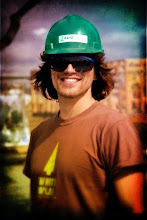
But back to my hair. The front of it reaches past my eyes, and the back nearly covers my neck entirely. In addition to my unkempt, borderline culturally inappropriate head of hair, my laziness usually allows my goatee to grow for a month or longer. All of that in combination with my caramel, middle-eastern skin makes me closely resemble a certain messiah-- namely Jesus Christ. To confirm this, when visiting the Christian groups at the secondary school, whispers spread like wildfire among the girls as I walked in, saying, “Anafanana na Yesu!” or “He looks like Jesus!”
And in my village, this is how I am treated. People think I am their Savior, that I have come to alleviate them from their poverty and physical suffering. Just like the Jews expected Jesus to be a great political leader who would save them from the Romans, the people in my village expect something so different from me. But Jesus had so much more in mind. He came to save humanity from themselves, to free people from the burdens of their own corruption.
I realize that it is highly arrogant and borderline blasphemous to compare myself to Jesus Christ. Whether you believe He was truly God Himself, an inspirational hippie philosopher, or a fictional character in a giant storybook, I pale in comparison. But upon reflection, my life here in Kenya draws some parallels to Jesus' life on this Earth. To name a few:
Wherever Jesus walked, multitudes would gather around. His mere words stirred inspiration and excitement among his listeners, his knowledge as a child surpassed that of the church leaders, and miracles sparked from his fingertips. Similarly, wherever I walk, people stop what they are doing and shout greetings and welcomes. With my guitar in hand, children flock and gather, eagerly listening to anything I would play. My computer with its internet capabilities gives me an “infinite knowledge,” and with my fancy camera, it is like I miraculously capture life itself.
So in my village there is no doubt I am special. Just my skin color gives me away as something “different,” “exciting” and “worth looking at.” And people's expectations of me are unbounded. In their minds, I am capable of doing everything. One of those main expectations is that of sourcing money from either myself or my wealthy friends, and putting that money into their pockets.
I came, not to give money, but as a medium for people to better their lives. I came to teach whatever I know and to share my life and my experiences to anyone interested. I came to bring a sense of work ethic and empowerment, that through hard work and struggle their lives may be changed. But people want money. They ask me for jobs even after I tell them I am a volunteer, and they ask me to write proposals for them even after I explain why I cannot. The people here see me with the same misunderstanding the Jews had when they saw Jesus. And because I do not offer money, food, or will not take their baby to America with me when I return, I am just as easily dismissed.
But back to religion. When I first arrived in Kenya, I sat through a three-hour church session where people sat in rapt attention, and danced without reservation during the entire period. I was astounded at their stamina and thought to myself how they must really love God and serve Jesus. But the longer I stay, the more I realize people here who call themselves “Christian” or “Muslim” are not really worshiping God. They worship money. They worship all the things that come with money—comfort, status, popularity, sex. They are just like most Americans.
Televangelists preach here in Kenya about wealth in Jesus' name, and America is revered for their prosperity, often to be claimed as a nation “Blessed by God.” A fine, upstanding “Christian” will just as likely double the price in the market to naïve tourists as would their non-religious countrymen, and public giving ceremonies are held in churches to make sure that the church members are “accountable” for their tithes and offerings.
It's not to say that Kenya is devoid of people who truly love and serve God. In both America and Kenya-and probably every other place-there will be those few who are truly devoted to their beliefs, and truly serve God with their lives. It is always refreshing to find someone like this, who knows what she believes and actually has it change her life.
But the love for money is such a tricky thing. Money simultaneously is the cause of most of the world's problems, yet the solution to many. Money provides opportunity and comfort, security and guaranteed medical attention. Yet money fosters worry and headache, greed and entitlement.
Many people dismiss religion as a social construction aimed as a money-making machine. In many cases I would have to agree with them. But I would find it difficult to judge those members in the churches who humbly give their tithes as foolish. Perhaps they give to a corrupt religious organization, but for those individuals, their giving shows that money is not their object of worship. Such behavior is commendable.
But money and poverty are knotty subjects. I came to the Peace Corps so that I might understand what poverty was really like. Instead, I am discovering that I will never know the true sting of poverty. I will never know what it is like to choose between purchasing water or food for that day or pray fervently each night that the rains should come. How can I judge anyone for loving money, when it has the power to alleviate basic suffering? How can I convict those who struggle every day with the most basic necessities, when money promises a deep breath from poverty's suffocation?
Just as I will never know what it is really like to be poor, Jesus will never know what it is really like to be human. Jesus knew what hunger was, and he very much tested a human's endurance for physical pain. But Jesus never knew sin. Jesus walked in perfection in God's eyes, and through his deliberate decisions he faced temptations and always came out clean. Never did he feel the blight of evil weighing upon his heart, or feel the hot sensation in his cheeks when a particular moral decision contradicted his conscience. And unlike all of humanity, Jesus never needed a Savior.
So as I continue my work in my village, my growing hair continues to be a reminder of my infantile attempt at self-sacrifice, and the understanding of but a few people of my purpose here.
Thursday, February 17, 2011
On Feet and Feats
Before coming to Peace Corps I worked part time at a liquor store. Once, while filling shelves of expensive boxes of liquor, the bottom of a box fell out as I was lifting it, causing many of the glass bottles filled with Hennessey to shatter at my feet. The pungent odor of cognac hit my senses immediately. I looked down to see my sandals completely soaked, and the shiny glass bits besieging my vulnerable feet. As I carefully maneuvered my way out of the danger, I chuckled at the irony of how many would dream of bathing their feet in expensive liquor. It was probably the most expensive bath my feet will ever experience.
But luxury, and extravagance are not new to the American culture. As an example, the supermarkets carry an assortment of inventive options for proper foot and body care, from “french roasted” coffee-scented soaps to pumice stones with real diamond dust mixed in (if not, then it's coming soon). I would not be surprised if I went back to America to see an AXE commercial advertising “Lust” – its new foot fragrance – which will undoubtedly have women reflexively humping your feet at the slightest whiff.
But in my village, the fragrance is that of the soil. Potent animal dung and fresh green leaves mix together with the smell of charcoal or wood-smoke, and people of all ages perfume their feet with this natural scent. When in bloom, flower pedals fall from the trees and bless their fragrant odor upon the earth. Small children come home after a hard day's play up to their knees in dried dirt, and grandmas walk for miles upon the dry, dusty road unshod. When the rains come, children playfully dip their muddy feet in puddles and continue on their way.
I also remember my shoe collection in America. I had a specific pair for everything: basketball, tennis , road-cycling, short-distance triathlon, long-distance triathlon, workout, hiking, swimming (sandals). Then there was the fuzzy-and-comfortable for indoor use only, “stylish-but-casual” for social outings, and unforgettably a couple pairs of converse.
Each shoe had a specific purpose. I could stand 3 inches taller and jump 4 inches higher in basketball with the proper shoe. My short-distance triathlon shoe saved me ¾ of a second every mile, and with swimming fins and paddles I could beat my Polish swim coach Bart Kizerioski in the 50m freestyle. They have shoes with tall heels for girls with height insecurities, shoes with wheels for skater kids, and squeaking, comic-book-themed kids shoes, so when they walk you always know where they are.
Many people here stand on naught but their soles. Their feet develop hard callouses that could bear even the hottest of coals, perhaps better than the rubber on the bottom of the shoes we buy. Many Kenyans can run barefoot for miles over gravel, hot sand, and uneven terrain, and still dance to their favorite worship songs when they reached home. They do not have the luxury of support a pair of running shoes have to offer, they are not afforded that extra advantage.
But it is not really about the lack of a pair of shoes. It is the inequality of resources available to people across the world. Contrary to me, my neighbors never took Kumon (advanced Asian math), Karate, or Science Camp growing up. Inside their humble homes isn't a piano, a video-game learning device, or calcium-rich, fortified cereals. Just by virtue of being born, I have had the luxury of all those learning aids. Where would I have been without them? What is it like to have never worn shoes in your entire life?
It tears deeply at my inner being to reconcile the idea of “fairness” across all people on this Earth. It is my moral obligation to aid those who started with less than I, that they may have a “fair” chance at wealth and prosperity? Should I pity those who were born with less, and should I envy those who were born with more? The most common answer I receive to these questions when I have the audacity to ask them aloud is, “Life is unfair.” I guess that is one way to stop thinking about things that bother me.
While I was walking by the school compound, I looked down and noticed the red clay covered in different sized footprints. I stopped and marveled at the imprint of each clearly defined foot: the five toes proportionally cascading in size and the arch leaving the normal foot distribution. I smiled as I imagined how each print was formed, how the children may have danced and played, laughing together in the afternoon sun, each of their bare feet like a rubber stamp, imprinted lightly on the earth. Perhaps it beats growing up with a Playstation 4 and spending your childhood days on a couch in front of a brightly-lit television screen. Sitting on the couch, wealthy kids' feet wont even touch the floor; their soles hanging worthlessly in midair without imprinting upon anything their existence.
Subscribe to:
Posts (Atom)